
The Forage-First Foundation: How Your Horse's Digestive System Actually Works
Understanding the horse digestive system is the single most important step in feeding well. Here's how forage drives everything.
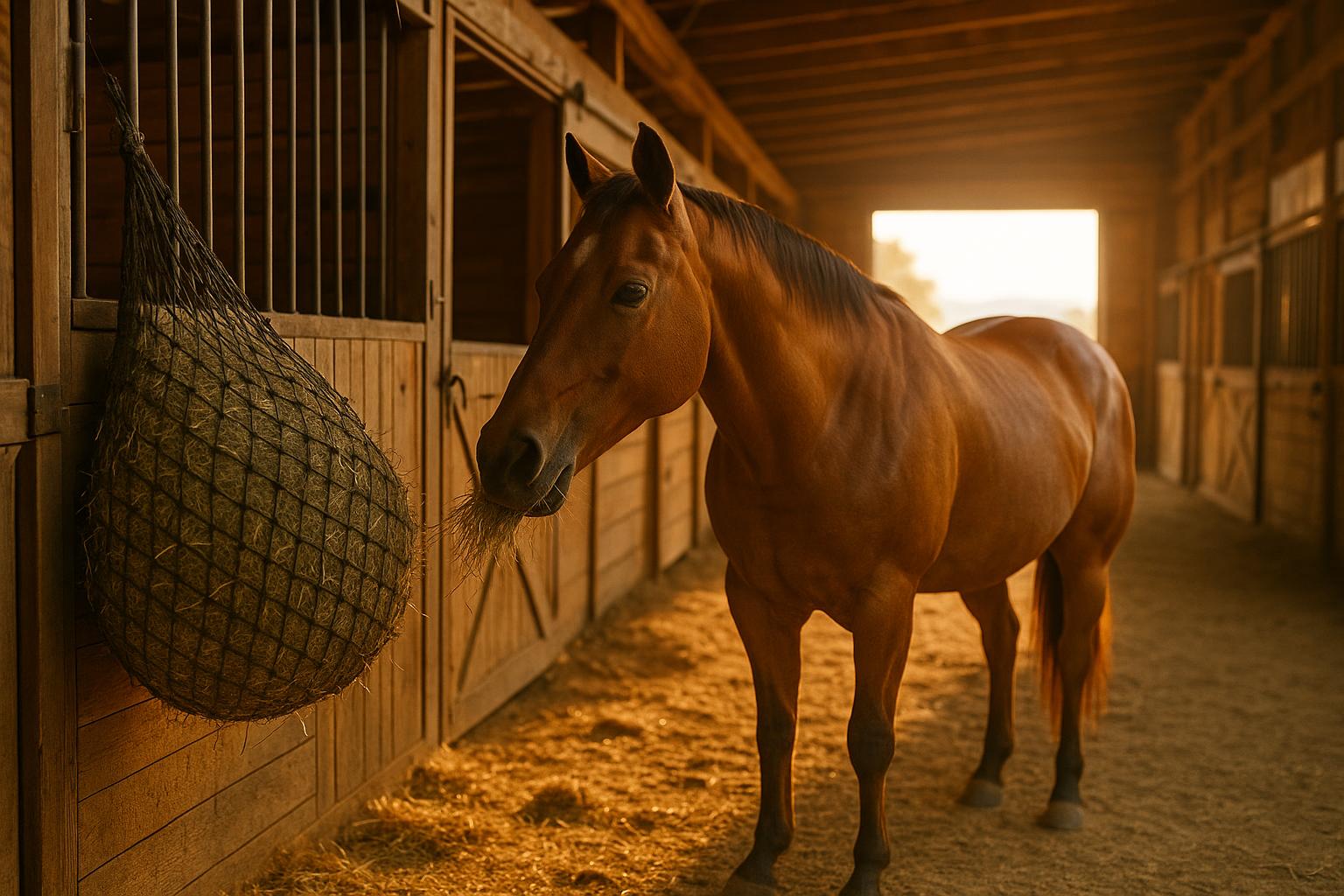
If I could sit down with every horse owner before they bought their first bag of feed or their first supplement tub, I'd skip the product talk entirely. I'd start here — with the digestive system. Because every good feeding decision you'll ever make for your horse flows from understanding how that system actually works. And every bad one — the ulcers, the colic scares, the weight problems, the dull coats, the unexplained behavior changes — can usually be traced back to ignoring it.
This isn't complicated. Horses aren't mysterious. They're actually beautifully straightforward once you understand the one thing their entire digestive tract was built to do: process forage. Continuously. In small amounts. All day long.
That's the forage-first foundation. Everything else — grain, supplements, ration balancers, performance feeds — is a layer on top of it. Get the foundation wrong, and no supplement in the world fixes what breaks.
Your Horse Was Built to Graze
Before we talk about anatomy, let's talk about evolution — because it explains everything.
Wild horses spend 16 to 18 hours a day eating. Not because they're bored. Because their digestive system was designed around continuous intake of low-calorie, high-fiber plant material. Grasses. Shrubs. The kind of food that takes a long time to chew, produces a lot of saliva, and moves slowly through a very long digestive tract.
This isn't trivia. It's the operating manual.
Your horse's body expects a near-constant stream of forage arriving in the stomach. It expects the chewing process to generate saliva — which is alkaline and buffers stomach acid. It expects fiber to move through the hindgut at a steady pace, feeding billions of microorganisms that do the actual work of extracting energy from plant material.
When we stable a horse, feed two big meals a day, and fill those meals with grain instead of forage, we're running that system against its design specs. The horse doesn't stop producing stomach acid just because there's no food arriving. The microbial population in the hindgut doesn't pause because we changed the substrate from fiber to starch. The system keeps running. It just starts breaking.
Understanding this — really getting it — is worth more than any supplement you'll ever buy.
How the Horse Digestive System Works: A Walk-Through
Let me walk you through the whole system, front to back. I'll keep it practical. You don't need a veterinary degree to understand this. You just need to know what each section does, what it needs, and what happens when those needs aren't met.
The Mouth: Where Digestion Actually Starts
Digestion begins with chewing — and chewing is more important than most owners realize.
A horse eating hay chews approximately 40,000 times per day. Each chew produces saliva. That saliva contains bicarbonate, which is a natural acid buffer. When the horse swallows, that saliva-coated forage enters the stomach with a built-in protective layer against the acid waiting there.
A horse eating grain chews far less. Less chewing means less saliva. Less saliva means less buffering. The grain hits the stomach without the same protective cushion that forage provides.
This is one reason dental care matters so much. A horse with sharp points or missing teeth can't chew properly, which means less saliva production, which means less acid buffering, which means higher ulcer risk — all before you've changed a single thing about the feed program.
The Stomach: Smaller Than You Think
Here's the fact that surprises most people: a horse's stomach is remarkably small relative to the size of the animal. It holds roughly 2 to 4 gallons — about 8 to 10 percent of the total digestive tract capacity. Compare that to a cow, whose rumen alone holds 40 gallons or more.
The horse stomach was designed for a steady trickle of food, not large meals. It produces hydrochloric acid continuously — not in response to eating, but all the time, around the clock. In a grazing horse, there's almost always forage in the stomach to absorb that acid. The saliva from chewing buffers what the forage doesn't absorb. The system stays in balance.
Now picture the horse that gets fed twice a day, at 7 a.m. and 5 p.m. That horse finishes its morning grain in 20 minutes. For the next 10 hours, the stomach is producing acid with nothing to buffer it. The acid splashes against the unprotected upper portion of the stomach lining — the squamous region, which has no mucosal defense.
That's how gastric ulcers develop. Not from a bad supplement choice. Not from a training problem. From a fundamental mismatch between how we feed and how the stomach was designed to operate.
The Small Intestine: The Enzymatic Zone
From the stomach, food moves into the small intestine — roughly 70 feet of it. This is where enzymatic digestion happens. Sugars, starches, proteins, fats, and many minerals and vitamins are broken down and absorbed here.
The small intestine handles these nutrients efficiently — when the volume is appropriate. The key word is "when." The small intestine can process a moderate amount of starch at a time. When you feed a large grain meal, the starch volume can exceed the small intestine's capacity to digest it all. The undigested starch doesn't just disappear. It passes through into the hindgut, where it causes real problems. More on that in a moment.
For a forage-based diet, the small intestine handles the soluble nutrients from hay and pasture without issue. There's no starch overload. The system works as designed.
The Hindgut: The Engine Room
This is where the real magic happens — and where the forage-first principle matters most.
The hindgut consists of the cecum and the large colon. Together, they make up roughly 60 percent of the total digestive tract volume. The cecum alone holds 7 to 8 gallons. The large colon holds 20 gallons or more.
The hindgut is a fermentation vat. It's populated by billions of microorganisms — bacteria, protozoa, and fungi — that break down the structural fiber (cellulose, hemicellulose) in forage that the horse's own enzymes can't touch. These microbes ferment fiber into volatile fatty acids (VFAs), which are the horse's primary energy source. On a forage-based diet, VFAs from hindgut fermentation supply 60 to 70 percent of the horse's daily energy needs.
Read that again: the majority of your horse's energy comes from microbial fermentation of fiber in the hindgut. Not from grain. Not from concentrates. From the slow, steady breakdown of the fiber in hay and grass by a microbial population that evolved alongside the horse over millions of years.
This microbial population is specialized. The fiber-fermenting microbes thrive in a specific pH range — slightly acidic to neutral (around pH 6.5 to 7.0). They need a consistent supply of their preferred substrate: structural fiber from forage. When they get that, the system runs smoothly. VFAs are produced at a steady rate. The gut wall stays healthy. Motility stays normal. The horse gets the energy it needs.
When they don't get that — when the substrate shifts suddenly to starch, or when forage is restricted — the consequences are serious.
What Happens When Forage Isn't the Foundation
I don't talk about this to scare anyone. I talk about it because these problems are preventable. Every one of them traces back to the same root cause: feeding against the design of the digestive system.
Gastric Ulcers
Equine Gastric Ulcer Syndrome affects an estimated 60 to 90 percent of performance horses and 11 to 37 percent of recreational horses. Those numbers are staggering — and they reflect how far modern management has drifted from the horse's evolutionary design.
The mechanism is straightforward. Continuous acid production plus extended periods without forage equals acid damage to the unprotected stomach lining. Stress, exercise on an empty stomach (the acid splashes more during movement), and high-grain diets all increase the risk.
The single most effective management tool for ulcer prevention is continuous forage access. Not a supplement. Not a medication. Forage. A horse that always has hay available — through a slow feeder, a small-hole hay net, or frequent small feedings — maintains the acid buffer its stomach needs.
Ulcer diagnosis and treatment are veterinary territory. But the management foundation that prevents ulcers in the first place? That's nutrition. And it starts with forage.
Hindgut Acidosis
When undigested starch from a large grain meal reaches the hindgut, it feeds a different population of microbes — the lactic-acid-producing bacteria that aren't the horse's usual fiber fermenters. These starch-loving microbes proliferate rapidly and produce lactic acid as a byproduct.
Lactic acid drops the hindgut pH. The fiber-fermenting microbes — the ones the horse actually depends on for energy — can't survive in an acidic environment. They start to die off. As they die, they release endotoxins. The gut wall becomes inflamed. Motility changes. The horse may go off feed, develop loose stool, become irritable, or show signs of discomfort.
This is hindgut acidosis, and it's one of the most underrecognized problems in modern horse management. It doesn't always present as an emergency. It often shows up as chronic low-grade issues: a horse that's "not quite right," that won't hold weight, that has intermittent soft manure, that seems girthy or uncomfortable.
The fix is the same as the prevention: make forage the foundation, and keep grain meals small enough that the small intestine can process the starch before it reaches the hindgut. For most horses, that means no more than 4 to 5 pounds of grain per meal — and many horses don't need grain at all.
Colic
Colic is the leading cause of non-traumatic death in horses. It has multiple causes, but several of the most common ones connect directly to digestive management:
- Impaction colic — often related to dehydration and low forage intake. Forage stimulates gut motility. Less forage means slower movement through the colon, which increases impaction risk.
- Gas colic — can result from rapid fermentation of starch or fructan in the hindgut. Large grain meals and sudden access to lush spring pasture are common triggers.
- Sand colic — horses on sandy soils without adequate hay intake may ingest sand. Consistent forage access reduces sand consumption by keeping the horse eating from a hay source rather than grazing bare ground.
I am not suggesting that forage access prevents all colic. Colic is complex, and some causes have nothing to do with nutrition. But inadequate forage is a contributing factor in enough colic cases that every nutritionist and every veterinarian I respect puts forage access at the top of the prevention list.
What Forage-First Feeding Actually Looks Like
The principle is simple: forage is the foundation. Everything else is built on top of it. Here's what that means in daily practice.
Start With Hay or Pasture — Not Grain
A horse's daily diet should be built around forage first. For most horses in most situations, that means hay (when pasture isn't available or sufficient) at a rate of 1.5 to 2.5 percent of body weight per day in forage dry matter.
For a 1,100-pound horse, that's roughly 16 to 27 pounds of hay per day, depending on workload, body condition, and the quality of the hay.
That is the baseline. Every other decision — whether to add grain, which grain, how much, which supplements — comes after the forage baseline is established and evaluated.
Maximize Forage Access Throughout the Day
The goal is to mimic the horse's natural eating pattern as closely as your management situation allows. Continuous access to forage is ideal. If that's not possible — and for many boarding situations it isn't — the next best option is to extend the time the horse spends eating.
Practical tools:
- Small-hole hay nets — slow the rate of consumption, extending a hay feeding from 45 minutes to several hours
- Multiple small feedings — if you can feed hay three or four times per day instead of two, do it
- Track hay — hay placed in a track or paddock system so the horse walks to eat, mimicking natural grazing movement
- Slow feeders — ground-level or mounted feeders with restricted openings
The point isn't perfection. It's reducing the gap between feedings. A horse that goes 10 hours without forage is at higher risk for ulcers and digestive disruption than one that goes 4 hours. Any step you take to close the gap helps.
Keep Grain Meals Small — Or Skip Them Entirely
Many horses don't need grain at all. A horse in light to moderate work on quality hay, with a ration balancer to cover mineral gaps, is often getting everything it needs without concentrates.
When grain is appropriate — for horses in heavy work, hard keepers, growing horses, or lactating mares — keep individual meals small. A general guideline: no more than 0.5 percent of body weight in concentrates per meal. For a 1,100-pound horse, that's roughly 5 to 5.5 pounds per feeding. Smaller is better. If the horse needs more calories than a single small grain meal provides, split it into two or three feedings across the day.
This isn't about being anti-grain. It's about respecting the capacity of the small intestine. When you keep starch loads within the small intestine's processing capacity, the hindgut stays healthy. The microbial population stays stable. The fermentation engine keeps running.
Make Feed Changes Slowly
The microbial population in the hindgut is specialized and slow to adapt. When you change the diet suddenly — switching hay types, introducing a new grain, or increasing concentrate volume — the existing microbial population isn't equipped to handle the new substrate. The result can be digestive upset, gas, loose stool, or colic.
Any diet change should happen over 7 to 14 days. Increase the new feed and decrease the old feed in gradual increments. This gives the microbial population time to shift and adapt. It's one of the simplest and most effective digestive management practices, and it costs nothing.
Water Is Part of the Foundation
I can't talk about forage and digestion without mentioning water. Fiber fermentation in the hindgut requires water. Forage holds water in the gut, supporting motility. A horse that isn't drinking enough is at higher risk for impaction regardless of how good the forage program is.
Most horses at maintenance need 5 to 10 gallons of water per day. Horses in work, in heat, or on dry hay need more. Clean, accessible water — checked daily and kept free of ice in winter — is as foundational as the hay itself.
Why This Matters More Than Any Supplement
I see it constantly in my consulting work: an owner spending $200 or more per month on supplements for a horse that doesn't have consistent forage access. A horse on three different gut-health products who goes 12 hours overnight without hay. A horse on a calming supplement who's actually anxious because his stomach hurts from acid splashing on an empty stomach lining.
The supplement industry is enormous. And some supplements genuinely fill real nutritional gaps — I recommend them when they're warranted. But no supplement replaces the foundation. You cannot supplement your way out of a forage problem.
Before you add anything to your horse's program — before you evaluate a single product label or wonder whether your horse needs magnesium or vitamin E or a joint supplement — ask these questions first:
- Is my horse getting enough forage? At least 1.5 percent of body weight per day in hay or pasture, minimum.
- Does my horse have access to forage for most of the day? Or is there a long gap between feedings where the stomach sits empty?
- Is my grain meal small enough for the small intestine to handle? Or am I dumping a large starch load into the hindgut?
- Have I changed the diet gradually? Or did I swap hay sources or add a new feed overnight?
- Is clean water available at all times?
If the answer to any of those is no, fix that first. Then we can talk about what goes on top.
That's what I do as a nutritionist — I help owners build the foundation before stacking supplements on a shaky base. If you want to understand how to evaluate the supplements you're already using, that conversation starts here too, with the forage baseline.
The Forage-First Principle in One Sentence
Your horse's digestive system was designed to process fiber from forage, continuously, in small amounts, all day long. Every feeding decision you make should support that design — not fight it.
Get the forage right, and you've solved half the problems most horse owners are trying to supplement their way through. Get it wrong, and no product on the shelf will make up the difference.
If you want help evaluating your horse's current feeding program — starting with the forage foundation and working through what's actually needed on top of it — that's exactly what I do. You can learn more about working with me at Pure Horse consulting, or reach out directly to set up a free discovery call.
Pure Horse Nutrition provides equine nutrition consulting and educational information. Montana Lowden is not a licensed veterinarian. The information and services provided are not intended to diagnose, treat, cure, or prevent any disease. Always consult your licensed veterinarian regarding your horse's health.
Montana Lowden
Certified equine and human nutritionist. AQHA World Show competitor and Canadian Nationals Horsemanship Champion. Based in Missoula, Montana.
More about MontanaGet articles like this in your inbox.
Bi-weekly notes from Montana — case studies, science, and what's actually working in the barn.